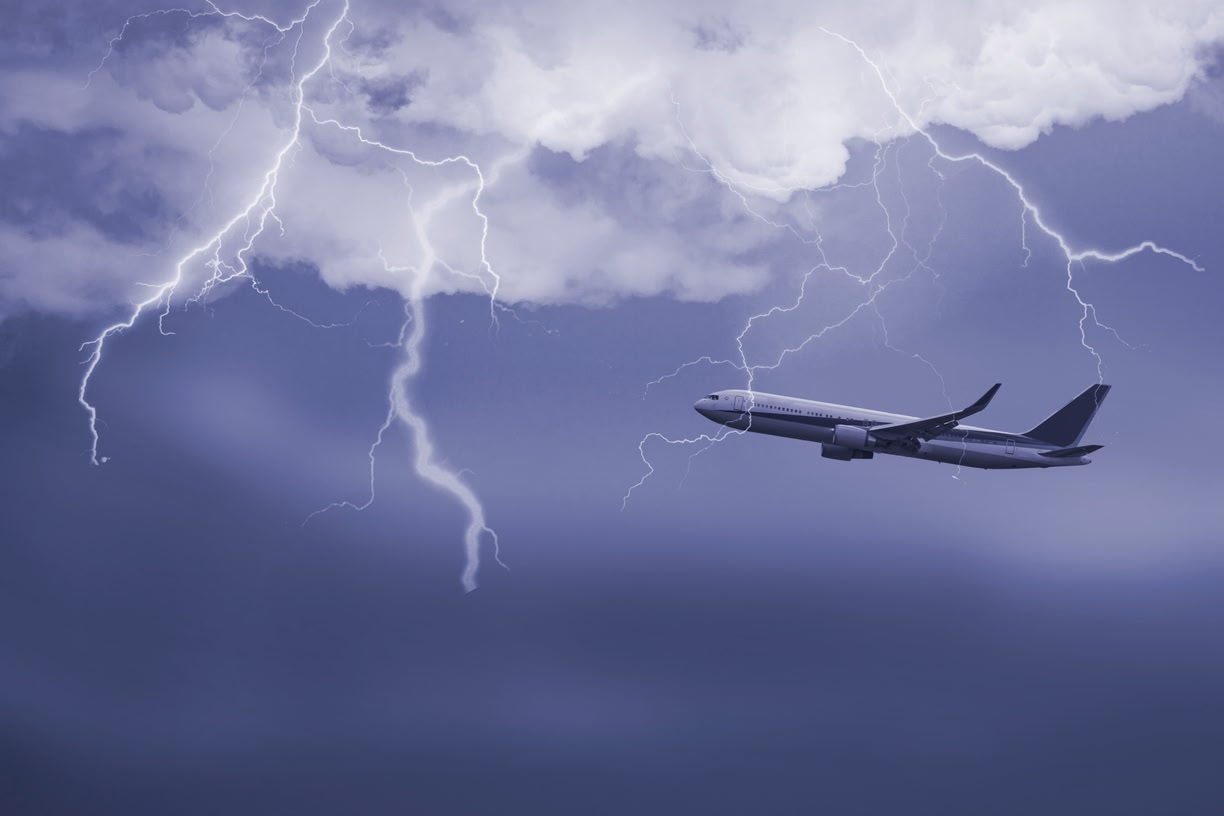
A quick look at the impressive aircraft engineering and skillful flight maneuvering that keep passengers safe when the weather takes a turn.
Modern planes are built to withstand the rougher side of Mother Nature. Although planes can fly in thunderstorms, there are several important things to know — both about the aircraft and how pilots approach these situations — that should help put passengers at ease when encountering turbulent weather.
Flying during unstable weather
Can planes take off in thunderstorms?
While rain generally doesn't present a problem, takeoff during an active thunderstorm is considered unsafe and is typically avoided. During takeoff, a plane doesn't yet have the altitude nor the airspeed necessary to help the pilot recover should they encounter a microburst (a sudden, sharp downdraft within a thunderstorm) or severe wind shear (a vertical or horizontal change in wind speed, direction, or both). So if you encounter a flight delay during bad weather conditions, it could be because a thunderstorm is overhead or approaching.
Do planes fly in thunderstorms?
Flying in bad weather at cruising altitude is much different than trying to muscle through it during takeoff. Sophisticated radar navigation allows pilots to identify cells of heavy precipitation so they can fly around them. Modern planes are also built to safely handle lightning strikes.
Turbulence can occur when flying in bad weather, and can also happen even when there's no rain in sight. Just like precipitation cells, pilots monitor turbulence and try to avoid it. When they do run into it, they have options for getting out safely, such as climbing, descending, or otherwise maneuvering the plane to smoother air.

What causes turbulence?
Turbulence in the sky is similar to a boat cruising over waves or a car driving over a bumpy road. The plane is simply moving through changes in airflow. Although this can feel uncomfortable or even scary for passengers, it's just a blip in the flight for pilots.
Modern aircraft are built to withstand incredible amounts of turbulence. For example, airplane wings flex to act as shock absorbers, computers detect changes and make in-flight micro-adjustments to help stabilize the plane, and the composite materials used to make new aircraft are stronger and tougher than ever. Knowing what causes turbulence and how a plane is built to withstand it should give you peace of mind whenever you fly.
Final thoughts: Can planes fly in thunderstorms?
Planes fly in the rain and in thunderstorms, but when it comes to takeoff and landing during this type of unstable weather, they typically avoid it. If your flight is delayed due to a thunderstorm, then that's just part of the airport and airline crews doing their job to keep passengers safe. And if you're mid-flight and feel turbulence in good or bad weather, well, that's not something to be worried about. It's a common occurrence, and one that pilots and the aircraft are both well equipped to handle.
Skyscanner can help you find the best flight, hotel, and car rental deals for your next trip.


