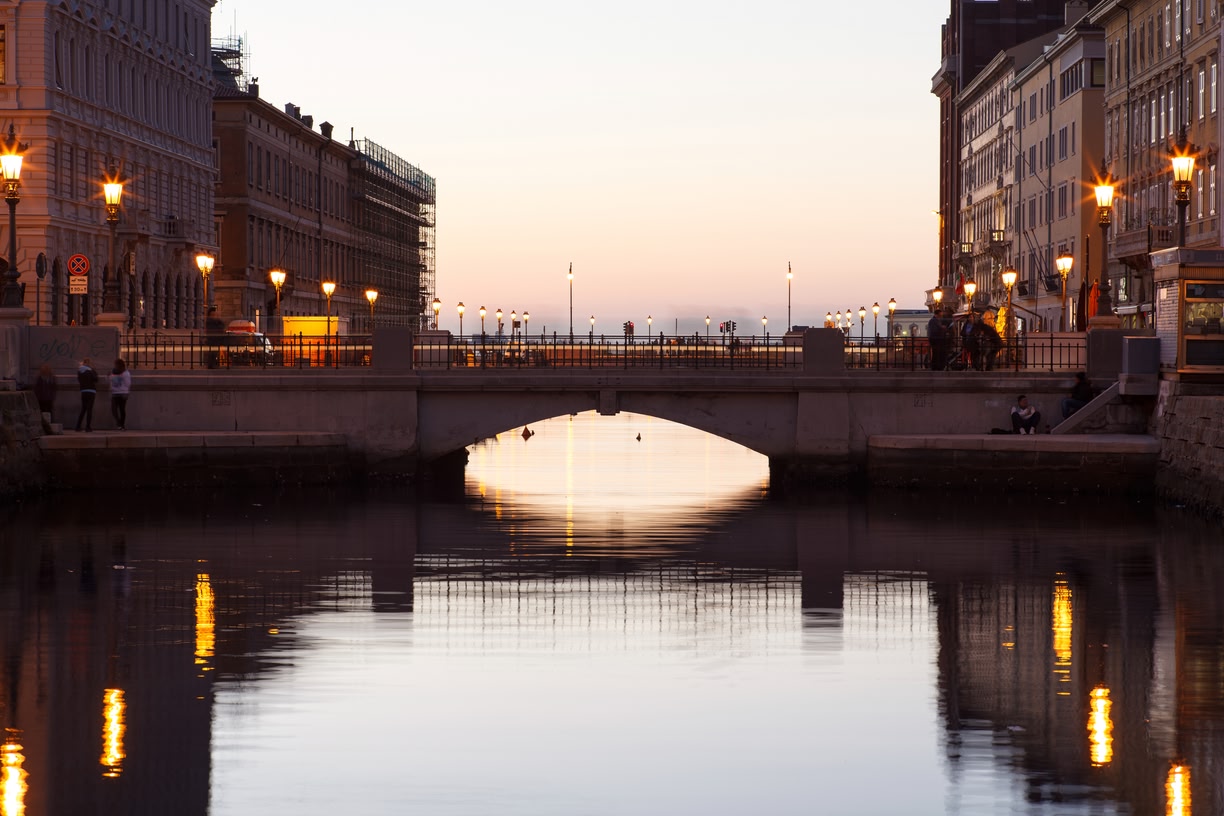
Just two hours from Venice, it sits regally on shores of the Adriatic Sea. Once part of the Austro-Hungarian empire, and, with closely neighboring Slovenia, Trieste is truly a world apart. A city of merchants and aristocrat, a unique blend and contrast of cultures and traditions, come discover Trieste’s romantic waterfronts, grand architecture, opulent castles and palaces, distinctive cuisine, and literary cafes that are second to none, even Venice.
What to See in Trieste
Piazza Unità d’Italia
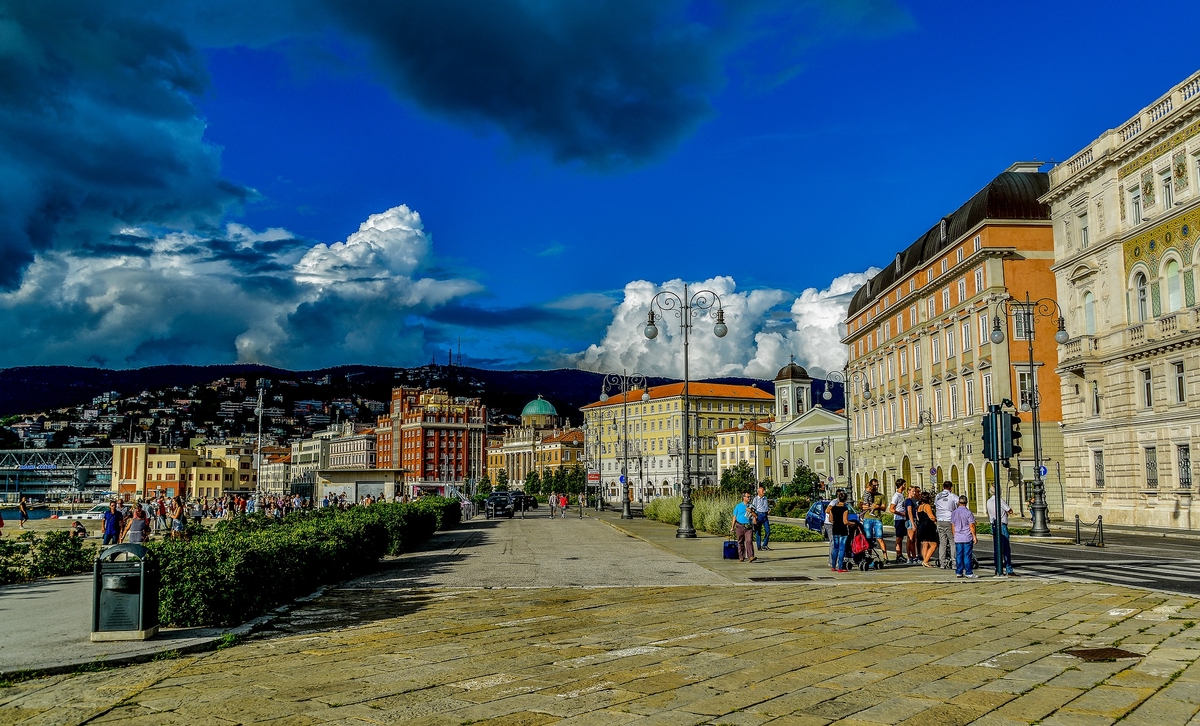
The majestic Piazza Unità d’Italia, the largest seaside square in Europe, is flanked on three sides by stunning architectural feats: Town Hall, Palazzo Vanoli, Palazzo del Lloyd Triestino, Palazzo del Governo, and Palazzo Pitteri. From here, make your way to The Molo Audace, a stone-paved promenade extending out towards the sea.
Colle di San Giusto
Trieste or Tregeste, as it was first known, was founded on San Giusto Hill, and the views alone are worth the 15-minute climb from Piazza dell’ Unità d’Italia. On your way up, don’t miss Teatro Romano di Trieste, the perfectly preserved seating, stage, walls, and columns of a Roman theatre.
Dedicated to the Roman martyr St. Justus, the Cattedrale di San Giusto is a result of two cathedrals, a beautiful example of Roman-Gothic architecture that also incorporates 13th-century Byzantine mosaics. Make sure to bring coins to see them flooded in light.
Next is Castello di San Giusto. Originally a Roman fort, it began its transformation into a castle by the Hapsburgs. A modest entry fee grants you entrance to the castle and its array of period paintings, furniture, and tapestry as well as the well-stocked armory and the archaeological collection of Roman ruins.
Canale Grande
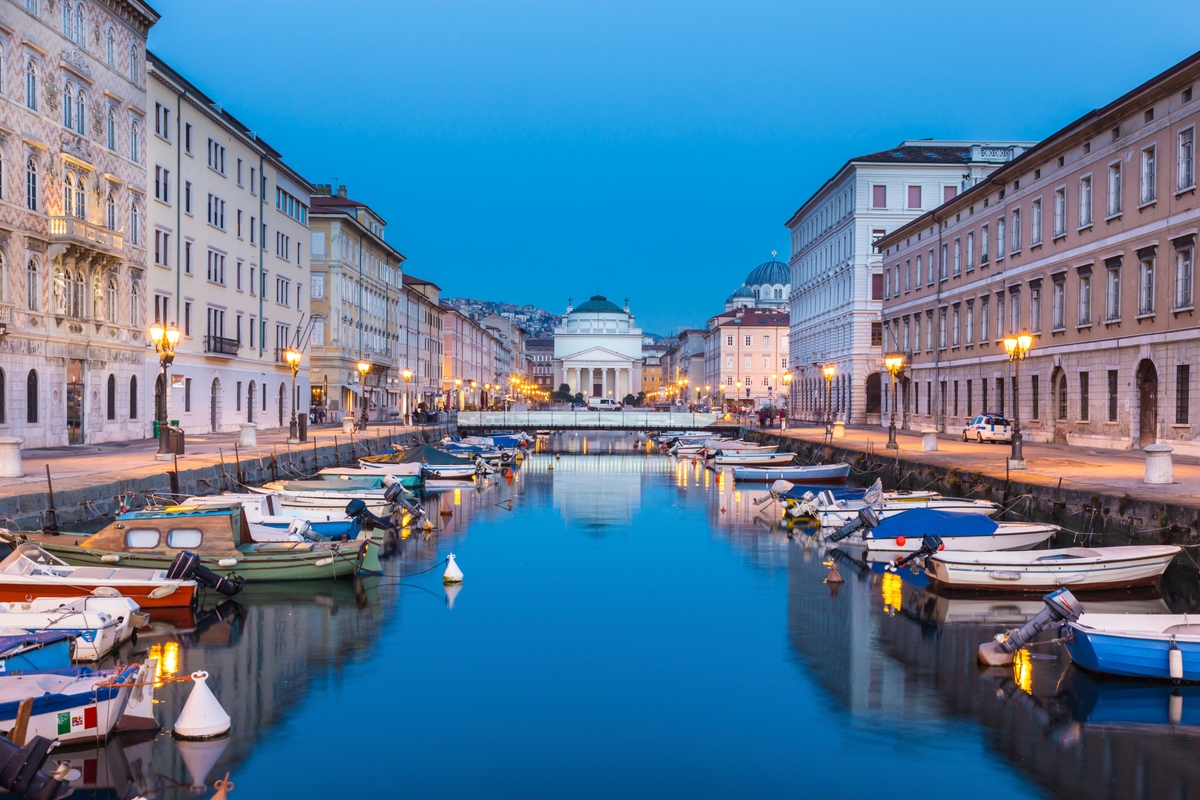
Lying perpendicular to the seafront, this lovely canal is best explored on foot. Dip into the Civic Theatre Museum Carlo Schmidl, located inside Palazzo Gopcevich, to stroll through rooms with beautifully inlaid floors and high ceilings that document Trieste’s rich tradition of theatre and music. On displays are costumes, puppets, jewelry, posters, sheet music, and instruments.
Cross the Ponte Rosso for a quick photo with the James Joyce statue. Joyce is one of many artists who’ve over their years made Trieste their home.
At the end of the Grand Canal stands the regal Neo Classic Sant’Antonio Taumaturgo. To the right is the imposing Neo-Byzantine domes of the Serbian Orthodox Chiesa di Santo Spiridione. Go on to explore the surrounding neighborhood of Borgo Teresiano, in particular, the shops along the Via San Nicolò.
The Revoltella Museum
Gifted to the city in 1872 by Baron Pasquale Revoltella, this palace-cum-art museum (modern and contemporary), is the perfect place to familiarize yourself with 19th and 20th-century Italian art. And, with free admission, there is no excuse not to.
Castello di Miramare
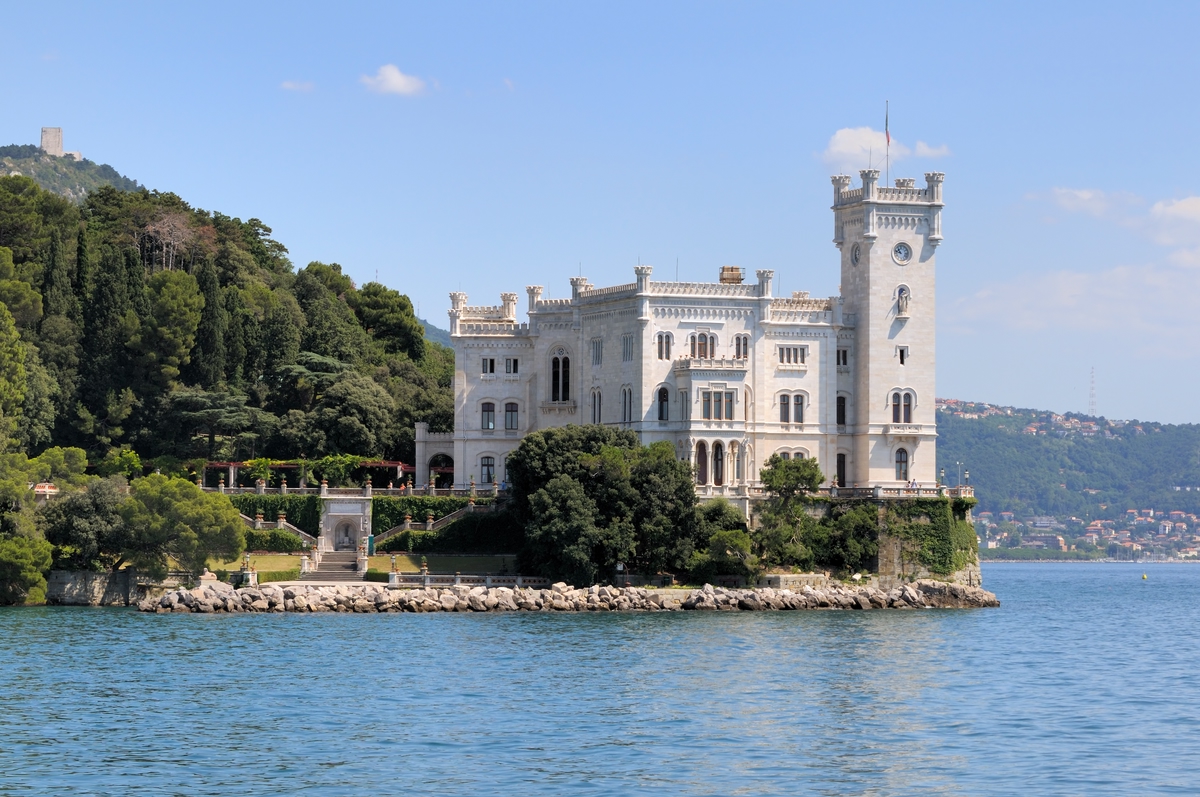
If you take one trip short trip outside the city center, make it to the seaside castle of Miramare. Surrounded by 54 acres of lush, manicured gardens, it was once the residence of Archduke Ferdinand Maximilian of Habsburg. The castle offers visitors a rare peek into the lives of Austrian aristocrats. You can visit the private apartments, guest rooms, ballrooms, dining halls as well as music rooms, all of which are still splendidly appointed with original furnishings and decorations.
What to Eat and Drink
Buffet

The first stop is Buffet L’Approdo for “Rebechin,” a typical, inexpensive buffet lunch or midday snack made up of a heaping plate of pork accompanied by sauerkraut and mustard. From mid-morning, lunch to pre-dinner aperitivo, Approdo is bustling with locals. Don’t be discouraged by the crowds; make your way to the overflowing counter, and point to the assortment of dishes. The staff is friendly and accommodating.
A stone’s throw from Piazza Unità d’Italia is Buffet da Pepi. It serves plump, juicy sausages, crispy pork chunks, and pig’s tongue. On cold days, try the Jota, a local soup made with slow-simmered pork, beans, and sauerkraut.
Seafood

Port cities are famous for seafood, and Trieste is no exception. In Italy, to describe a restaurant as “simple” is to pay it a compliment. It means there are no fillers, no pretense–just good quality food and a friendly atmosphere.
Trattoria alla Sorgente is that–a simple trattoria that offers diners handmade pasta and the freshest of seafood. Start with the mixed fish fry and follow up with handmade spaghetti alle vongole. Make sure to leave some room for the homemade desserts.
If you are willing to go the extra mile for a superlative seafood meal, grab a cab for a 15-minute ride to the hills above Trieste to Scabar. A spot on this restaurant’s terrace opens up to stunning views of the city and harbor. You feast on a seasonal seafood menu, featuring almost exclusively local products and wines.
Coffeehouses

Coffeehouses abound in Trieste; it was this very port that brought the country its first beans and served as the gateway for coffee into Europe.
Located on the ground floor of Palazzo Stratti, Caffè degli Specchi, sits at the heart of Trieste’s grandiose Piazza Unità d’Italia. Caffè San Marco is another historic coffeehouse. A meeting point for the city’s intellectuals, it now features a book shop and hosts literary events.
For something a bit more intimate, though losing none of the history, stop by Antico Caffe Torinese. Founded in 1919 by an interior designer of luxury ships, it’s a lovely cafe by day and a hip cocktail bar by night.
Drinks

If its craft beer you crave, then Mastro Birraio, with its rotating tap list and a robust selection of bottled brews from local and global breweries, is yours and is considered Trieste’s best craft beer pub.
A veritable cocktail bar, Mor stocks over 300 liquor labels to mix with homemade syrups. The space is small and dimly lit, and that means you’ll make friends quickly. Because the cocktail menu changes weekly, you’re always in for a delicious surprise.
Check out Al Ciketo; it’s part of a new crop of bars that class things up with a curated wine list and gourmet bites.
Urbanis, right on Piazza della Borsa, and Gran Malabar, on Piazza San Giovanni, are local institutions for pre-dinner aperitivo. Sit back and order the Hugo Spritz, a blend of elderflower syrup, prosecco, lime, soda, and mint.
Something Sweet

Parting is such sweet sorrow. Please don’t leave Triste without tasting this city’s dolci.
Start with Chocolat, which you’ll find in the old Jewish ghetto. All products are made on-premises and are absolutely decadent! Opt for the hot chocolate, the many chocolate gelato options, or the decadent black forest cake. In other words, a little bit of everything.
Pasticceria Penso, Trieste’s pride and joy since 1918, specializes in Austrian, Hungarian, and Italian specialties–strudel, sacher, and presnit. Penso is where locals go to order cakes and sweets to celebrate life’s milestones.
Meringues, marzipan, and linzer tortes are artfully displayed at this Art Nouveau gem, La Bomboniera. A visit here is truly a treat for the eyes and palate.
Where to Stay in Trieste
L’Albero Nascosto
L’Albero Nascosto is a family-run boutique hotel whose spacious, vaulted ceiling rooms are furnished with antique pieces and contemporary art. Moderately priced, centrally located, with wifi and breakfast included, this “hidden tree” won’t stay hidden long.
Savoia Excelsior Palace
Want to go all out in Trieste? Behold the Savoia Excelsior Palace. Ask for a room or suite with waterfront views. The nautical color palette is likewise reflected in the furnishings that blend classic with contemporary style. There is an excellent onsite Savoy Restaurant (and Lounge) by Eataly, 24-hour room service, fitness room as well sumptuous lounges, halls, and libraries.
Hotel all’ Arco
Hard to believe Hotel all’ Arco is a budget hotel. Situated on a quiet street, this intimate hotel is an ideal choice because it offers value without sacrificing quality and location.


