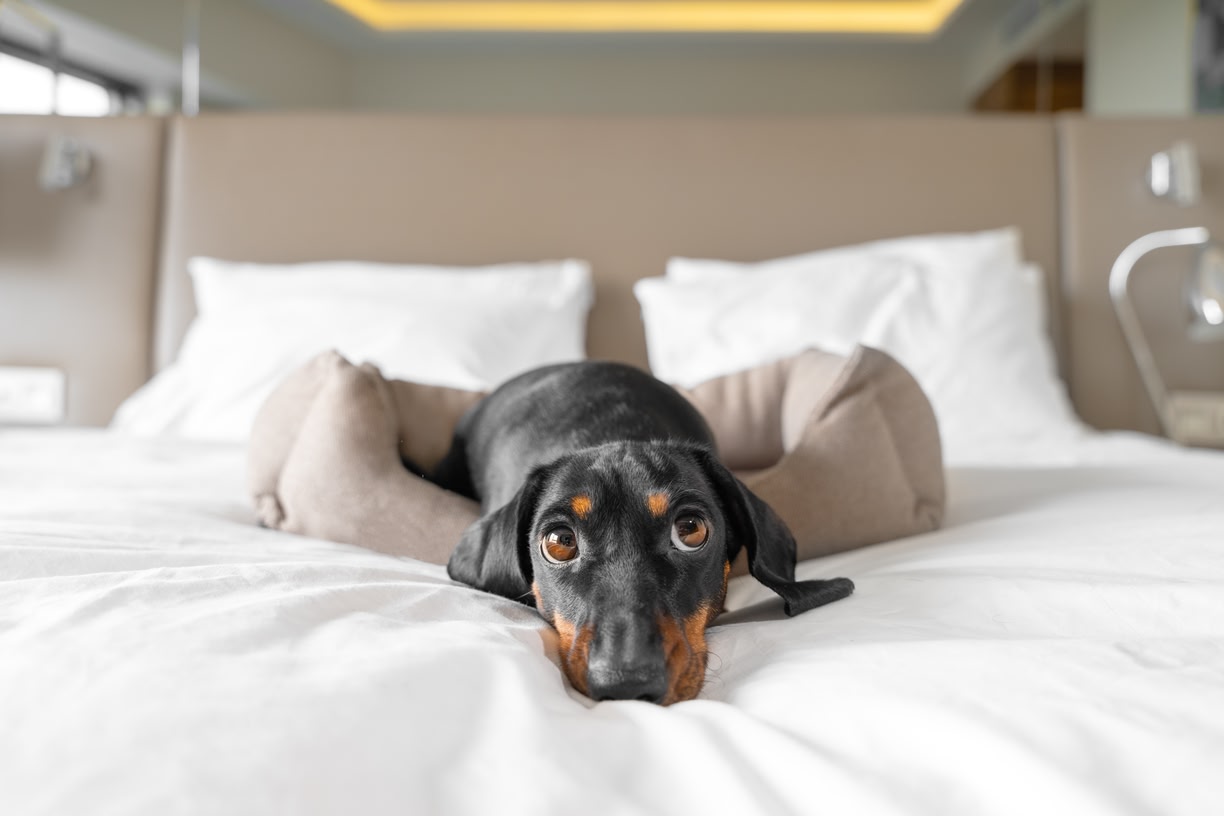
Traveling with a pet? Learn which hotel chains have the most pet-friendly policies, lowest fees and best amenities for your furry travel companion.
Good to know:
Which hotel chain is the most pet-friendly?
Determining the most pet-friendly hotels depends on several factors, including fees, restrictions and amenities.
Kimpton tends to have the fewest restrictions on pets and doesn’t charge pet fees, but room rates can be more expensive than other chains.
Bargain brands like Motel 6 usually offer no fees or restrictions but have fewer amenities.
Mid-tier hotels may strike a balance between fees, room rate and amenities, but may require additional hunting to find pet-friendly locations.
In this guide, we break down everything you need to know for traveling with a pet, so you can save money while you (and your pet) enjoy the best experience possible.
Do pet-friendly hotels cost more?
The first thing to know is that “pet-friendly” doesn’t mean free—it just means a hotel allows pets (with restrictions). Pet-friendly rooms typically cost the same as similar, non-pet rooms. However, most hotels charge a non-refundable cleaning fee for staying with a pet.
These fees can be charged per night or per stay. A one-time $50 fee may be cheaper on a long trip than paying $10 per night, so always confirm fees. Fees vary widely between hotel brands and can range from $25–$150 per stay.
Some hotels will place a deposit hold on your credit card rather than charge an upfront pet fee. This deposit is in addition to the regular incidental deposit. If no repairs or deep cleaning are needed, the deposit will be refunded.
In some cases, a hotel might require a non-refundable pet fee and a refundable deposit. Be sure to read the fine print when comparing pet-friendly hotel prices and budget accordingly. Even though the deposit is a hold and not a charge, those funds will be unavailable until after your stay.
Are there any hotel chains that don't charge a pet fee?
Yes, Kimpton hotels don’t charge pet fees. Many Red Roof Inn locations, Motel 6, Aloft and Virgin hotels may waive fees, as do certain Wyndham hotels such as La Quinta. These policies vary by franchise and often come with restrictions. For instance, it may only apply to one pet under 80 lbs; be sure to check with your destination.
What hotel chain has the cheapest pet fee?
Among hotel chains that charge a pet fee, Choice Hotels (Radisson, Comfort Inn, Quality Inn) tend to be the lowest (averaging $25–$35 per stay), based on commonly reported ranges. Unfortunately, many Choice hotels simply don’t allow pets.
Budget-focused extended-stay brands, such as Extended Stay America, often charge a moderate amount for pets ($60-$100), while Marriott and Hyatt can sometimes charge over $100 per stay.
Hotel | Accept pets? | Average fee per stay* |
|---|---|---|
Wyndham | Many locations | Low ($25-$60) |
Choice | Some locations | Low ($25-$60) |
Hilton | Most locations | Moderate ($60-$100) |
IHG | Many locations | Moderate** ($60-$100) |
Best Western | Some locations | Moderate ($60-$100) |
Hyatt | Most locations | High ($100+) |
Marriott | Many locations | High ($100+) |
* Averages are based on commonly reported ranges. Brands/locations vary.
** Except Kimpton, which has no fee.
How to avoid pet fees at hotels
If you’re unable to find a hotel that doesn’t charge a pet fee, try these tips to minimize cost.
Join loyalty programs
Hotel reward programs are usually free to join and may waive pet fees. These policies can vary by location, so confirm before booking. Even if membership doesn’t guarantee a waived fee, demonstrating that you are a loyal customer can occasionally prompt a sympathetic manager to waive the fee. Loyalty programs like Marriott Bonvoy, Best Western Rewards and Choice Privileges may waive pet fees.
Plan around fees
Hotels may charge pet fees by the night or with one fee for your whole stay. If you’re staying many nights, it might be cheaper to pay the one-time fee.
Consider extended-stay suites
While brands like Residence Inn, Home2 Suites and Candlewood Suites offer discounts for longer stays, you can book them for any number of nights. These brands often have lower pet fees and fewer restrictions.
What are the rules for pet-friendly hotels?
Policies vary between pet-friendly hotel chains, but some common rules include:
Allowed pets: Most pet-friendly hotels permit dogs and cats, typically limited to one or two pets per room. Unusual pets like birds and reptiles generally require prior approval. The exception is Kimpton hotels, which welcome any number of pets that “fit through the door.”
Size/weight limits: Many hotels cap pet weight at 40–50 lbs. For bigger dogs, Best Western and Red Roof Inn allow up to 80 lbs, while Motel 6 permits two pets up to 150 lbs total.
Breed restrictions: While pit bull and rottweiler owners know how loving and gentle these breeds can be, some hotels will not accept these or other breeds they deem dangerous. If you have a larger breed or one that others might find intimidating, confirm with the hotel before booking.
On-site restrictions: Pets are typically not allowed in restaurants, bars, pools or fitness centers. They must remain in the guest room or designated relief areas.
Leash and cleanup: Even pet-friendly hotels rarely have off-leash areas. Pets must be leashed when outside the room, and owners must clean up after them. Many hotels provide waste stations and bags.
Supervision: Pets must be supervised or crated in the room. Loud barking or unattended animals may lead to eviction.
Furniture and bedding: Most hotels forbid pets on beds or upholstered furniture. Some provide pet beds, blankets, or protective coverings.
Health paperwork: Some hotels ask for proof of rabies vaccination or flea/tick treatment. It’s wise to carry vaccination records just in case.
Pet-friendly hotels FAQs
Travel Tips for Pets
Follow this checklist for a smooth hotel stay with your pet:
Double-check policies: Never assume a hotel’s website is up-to-date. Call to confirm specific pet policies and fees to find the most pet-friendly hotel.
Come prepared: Bring a crate or carrier (for leaving the room), plus your pet’s food, water bowls, leash, toys and waste bags.
Pet amenities: If you forget something, many pet-friendly hotels offer extras like pet beds, bowls and treats (especially Kimpton and some Hilton/Mars Petcare partners). But don’t assume every hotel that allows pets will have these amenities.
Documentation: Pack proof of vaccinations. Even if it’s not explicitly required, having this paperwork can streamline check-in.
During your stay: Keep dogs on a leash in hallways. Use any “Pet in Room” door-hanger, and let the front desk know if you need to leave your pet crated for a short time. Call housekeeping if your pet makes a mess—addressing accidents promptly can avoid larger cleaning charges.
Damage, cleaning fees and liability
Traveling with your pet—especially if it’s a new experience for them—can invite some risk. If your pet damages furniture or has an accident, you’ll be charged repair or deep-cleaning fees. Hotels may evict you if your pet causes repeated disturbances or damage.
If your dog bites or injures someone—even if it’s the first time your pet has shown aggression—you are legally liable in most states. Hotel pet agreements require you to accept full responsibility for your pet or service dog.
Injured parties (guests, hotel employees, or others) may sue you for medical expenses, pain and suffering, lost wages and emotional distress.
How to protect yourself
Take these steps to prevent costly and stressful incidents:
Buy liability coverage: Many renters or homeowners insurance policies include dog bite liability coverage (usually $100,000–$300,000). Check whether yours applies to travel.
Pet liability insurance: Specialty pet insurance (or umbrella policies) can cover incidents away from home.
Avoid risk: Never bring an aggressive or poorly socialized pet to a hotel. Always leash them in shared spaces, and consider a muzzle if they can be reactive. Keep your pet crated or attended in the room, and put a “Pet in Room” hanger on the door.
Conclusion
Pet policies can vary widely between brands and locations, so it’s important to confirm policies with individual hotels when determining which hotel is the most pet-friendly. Make sure your pet’s breed and size are allowed, and confirm any other requirements, restrictions and fees. When bringing your pet into a hotel, keep it leashed or crated and only in permitted areas. If you need to leave your pet unattended, request permission first to avoid risking getting kicked out of the hotel. Follow these tips and you’re sure to enjoy your trip with your furry bestie.


